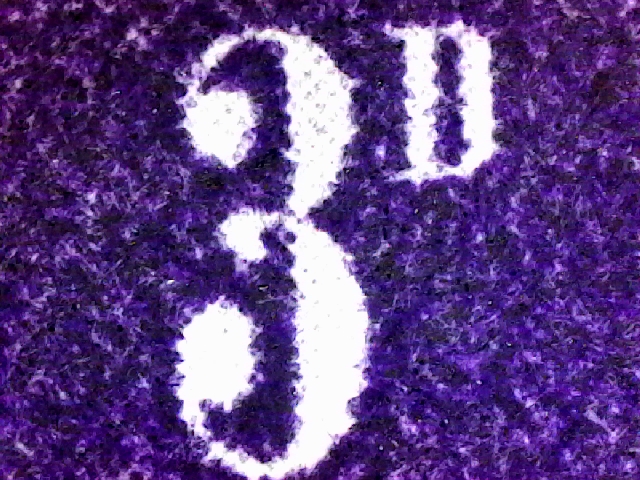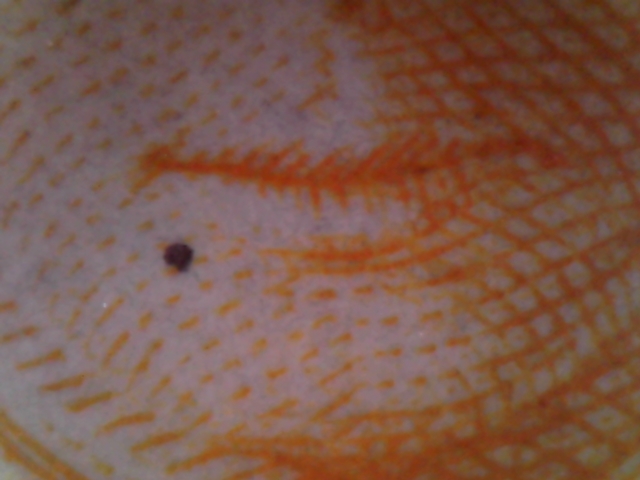
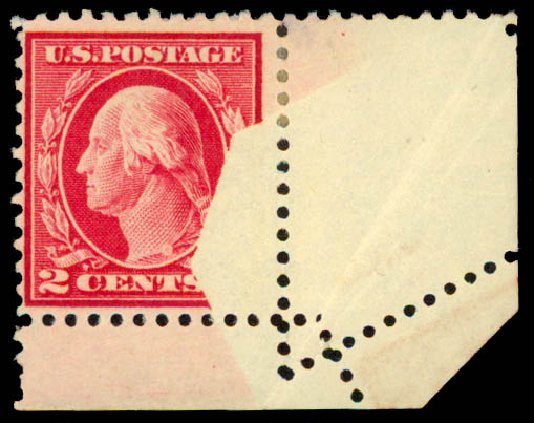
In the most basic sense an error or flaw on a postage stamp can be a mistake made by the artist in the design of the stamp and also an error made in the production or manufacture of a stamp during it’s preparation and printing stages. These are often generally referred to as EFOs. Essentially a stamp error means that the stamp does not have the intended appearance as set out in the initial design idea – this could be incorrect wording or illustrations, missing features, mis-perforation, incorrect watermarks and missing or incorrect colours for example. Errors or flaws tend…
-
-
I obtained some part sheets of this stamp recently and having also bought the Stanley Gibbons Specialised album for the Kings I found a few flaws were mentioned. And so I was pleased to find I have two of the listed three. These are the stamps in question… So there are three flaws listed in the Gibbons catalogue. The one I don’t have is the “Crown Flaw” (QCom15a) which looks like a white smudge on the front of the crown… Referring back to the first image of my stamps, the affected stamps are the two on the left. The green arrows…
-
Further to John Spencer’s comment here… John kindly sent me some images of another flaw that appears on the Falkland Island Dependencies Map set of stamps. I reproduce here the comments he sent me. Many thanks John ! Plate1 R5/1 Saunders and Harding in their Study Paper No 4 and later Goldberg gives a description for stamps in this position as: Small breaks in top frame line at either end. Defective 2nd E in WEDDELL. However, the most prominent feature is the spot on the King’s lower right cheek/chin/around his mouth. Possibly it was assumed to be a blemish or…
-
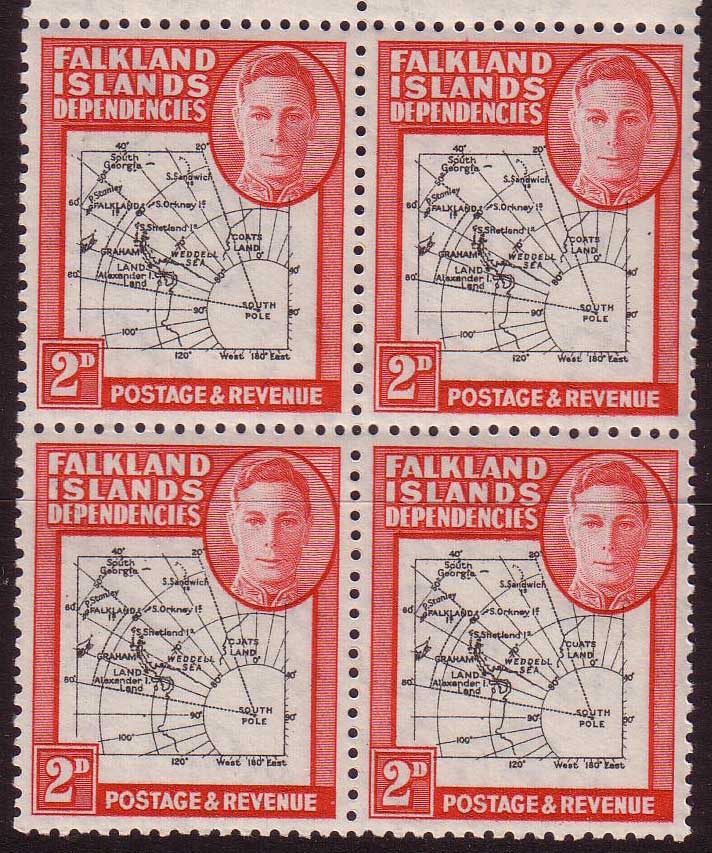
This post is going to deal with identifying some of the flaws in the Falkland Islands Dependencies ‘Map’ issues. There are two printings to deal with, commonly referred to as the thick and thin maps. Really the first thing to do is identify which set we are dealing with. The first set produced was the thick set, which ran from 12th July 1946 through to 1949. The later thin map set was introduced in 1948 and is the more valuable set in terms of money. So let us start with looking at thick and thin maps together. Here are two…