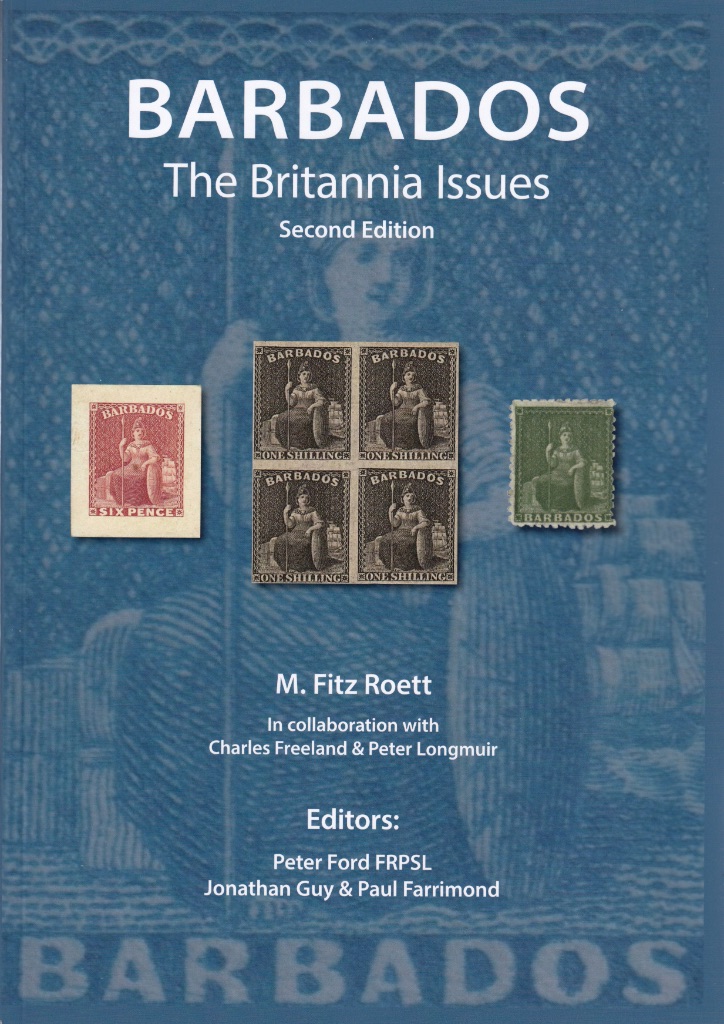
This book is the second edition of Fitz Roett’s book examining the early Britannia issues of Barbados. The editors have taken the opportunity to thoroughly review and update the content since the first edition was published in 2013, as well as making changes to the layout and formatting. Where possible, different images of blocks and covers have been used than those in the first edition. Profusely illustrated in colour, in addition to background details on each stamp and issue, the book provides detailed listings of known blocks and covers along with their provenance. An essential book for the Barbados collector.…
-
-
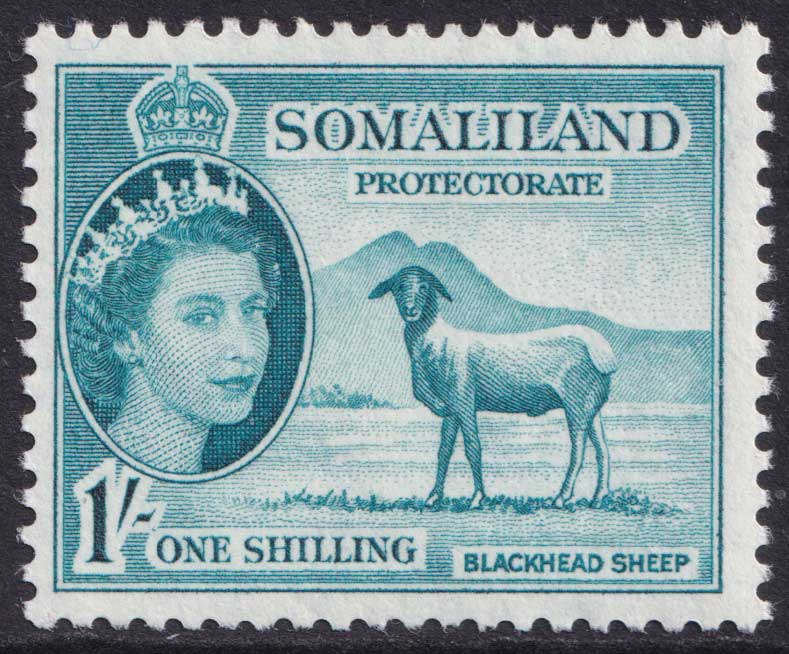
The Somaliland Protectorate issued a definitive stamp set for Queen Elizabeth II in 1953, at the beginning of her reign. This set included 12 stamps, ranging in denomination up to 10 shillings, and is catalogued in Stanley Gibbons as SG137–148. These stamps were released while Somaliland was still a British protectorate, and they feature classic colonial-era designs with QEII’s portrait. They were printed by Bradbury Wilkinson, known for high-quality intaglio engraving, giving the stamps a crisp, tactile finish. All the stamps of British Somaliland were withdrawn from sale on 25 June 1960 as Somaliland obtained independence and merged with Italian…
-
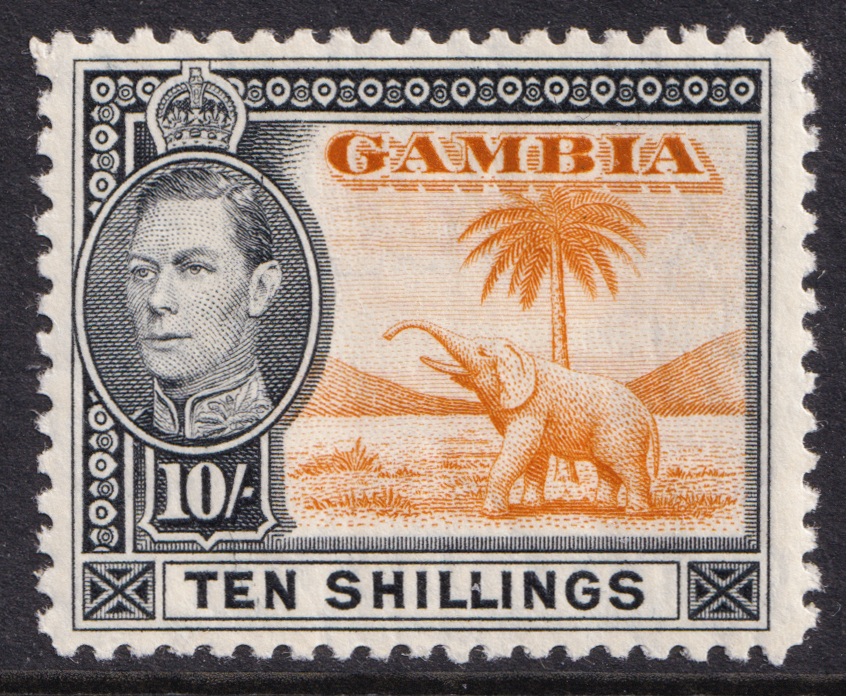
The Gambia Colony and Protectorate was the official designation for The Gambia during the colonial era. This administrative arrangement, which existed from the late 19th century until independence in 1965, reflected the dual nature of the territory. The “Colony” referred to the area around the capital, Banjul, and the surrounding areas along the Gambia River, which were directly governed by the British colonial administration. The “Protectorate” encompassed the inland regions and was characterized by indirect rule, where local chiefs and authorities maintained a degree of autonomy under British oversight. This unique colonial structure shaped The Gambia’s development and governance, leaving…
-
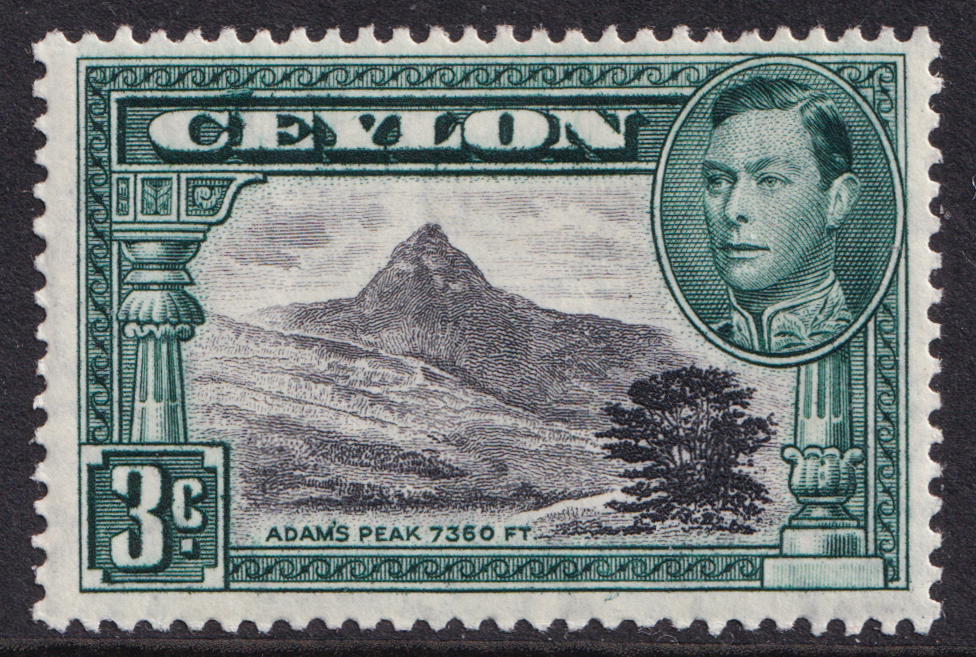
This King George VI stamp continued on from the pictorials that had started within the earlier King George V’s reign. The 3c has several perforation varieties and also watermark varieties. Adam’s Peak is a sacred mountain located in central Sri Lanka. It stands at a height of 2,243 meters (7,359 feet) and is known for the Sri Pada, a rock formation near the summit believed to be the footprint of various religious figures such as Buddha, Hanuman, Shiva, Adam, or St. Thomas, depending on different religious traditions [1]. The mountain is also referred to by other names such as Mount…
-
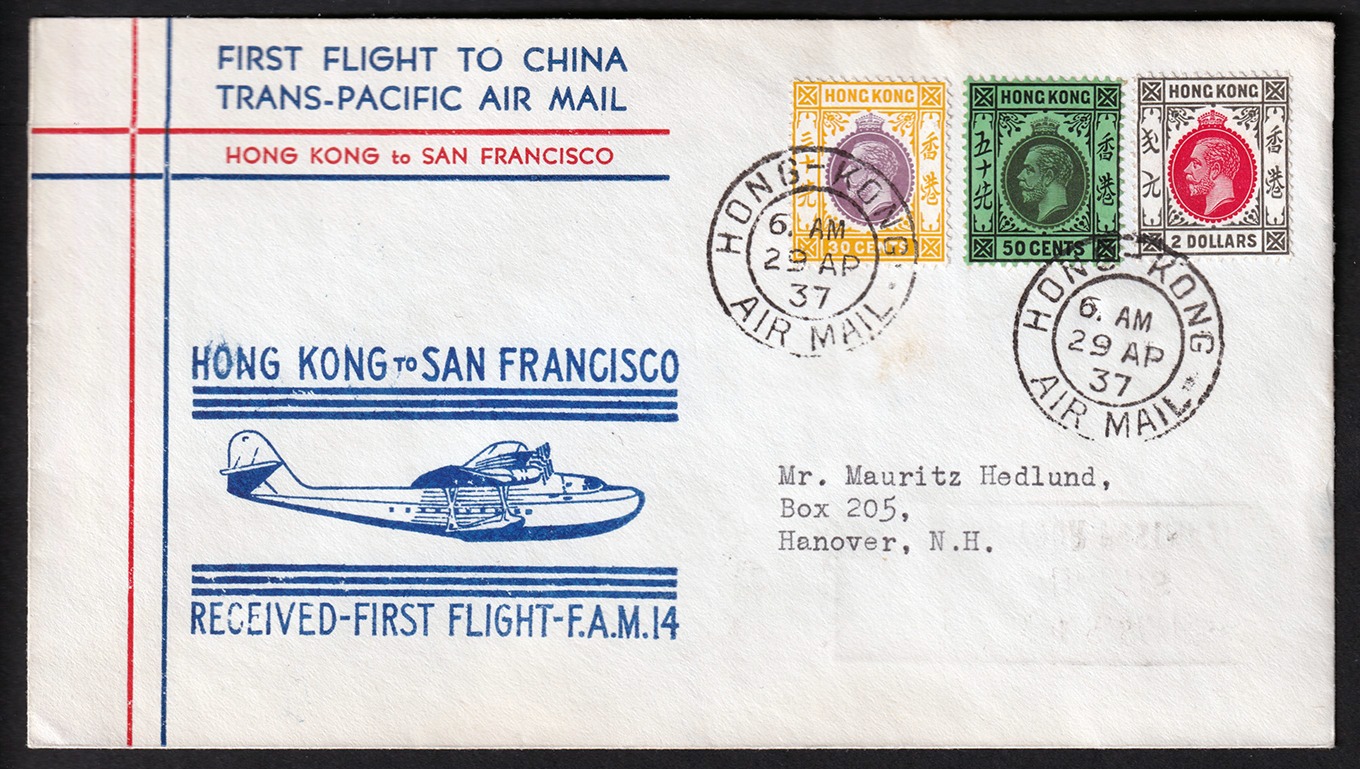
This interesting cover came into my possession recently, so I thought I would do a write-up of it here. My thanks go to Ragui H. Michael over on the British Colonies Stamp Collectors Facebook Page for helping supply me with lots of interesting information. The cover bears King George V stamps, used around a year and a half after his death. It was flown from Hong Kong to San Francisco in 1937 and carried on the aircraft known as the China Clipper. China Clipper was the first of three Martin M-130 aircraft built by the Glenn L. Martin Company, costing…
-
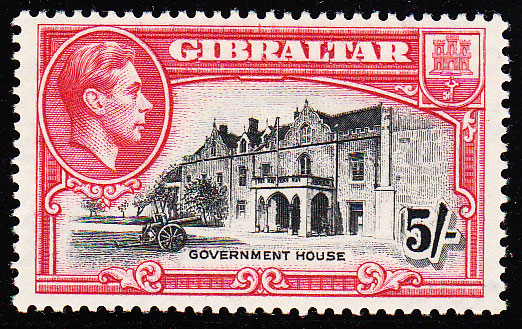
Gibraltar was known to the ancients as Mons Calpe, one of the Pillars of Hercules. Ptolemy first determined its latitude, and the correctness of his calculation is corroborated by the observations of the present day. The conspicuous form and isolated position of this rocky promontory, which stands like Nature’s monument with all its rugged steeps at the entrance to the Mediterranean Sea, made its name familiar to ancient navigators, and we find the Rock referred to and described by both Greek and Roman writers. Frederick Sayer 1865 The ‘Rock’ is less than three miles long and less than a mile…
-
This is an old article I found in a copy of The Straits Times from 1935. I thought it was an interesting read and it mentions a rare Gibraltar error on a sheet full of 120 stamps. It also briefly mentions Captain H. St. C. Garrood who designed the nice views of Gibraltar for the KGV definitive and later the KGVI definitives. Hopefully no one will mind me reproducing this here.
-
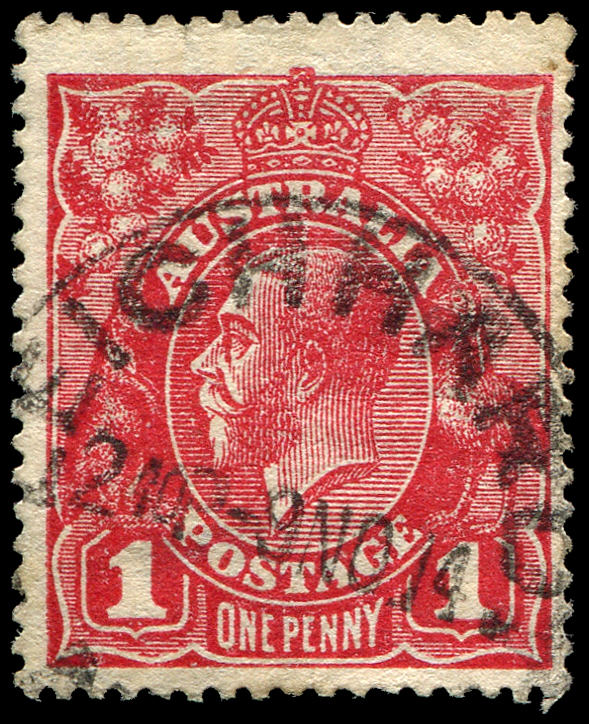
The Australian penny red KGV Head was first issued in 1914 and quickly became one of the most studied stamps on the planet. After 99 years collectors thought the issue had no more secrets – that myth was destroyed only a few short months ago. In early 2013 a Gentleman in Scotland discovered an Australian 1d Red KGV stamp (cancelled 99 years ago in suburban Sydney) which now plays a significant part in philatelic history. The Australian 1d red stamp with the King George 5th portrait is the most popular Australian stamp collected in Australia and overseas. What aspect of…
-
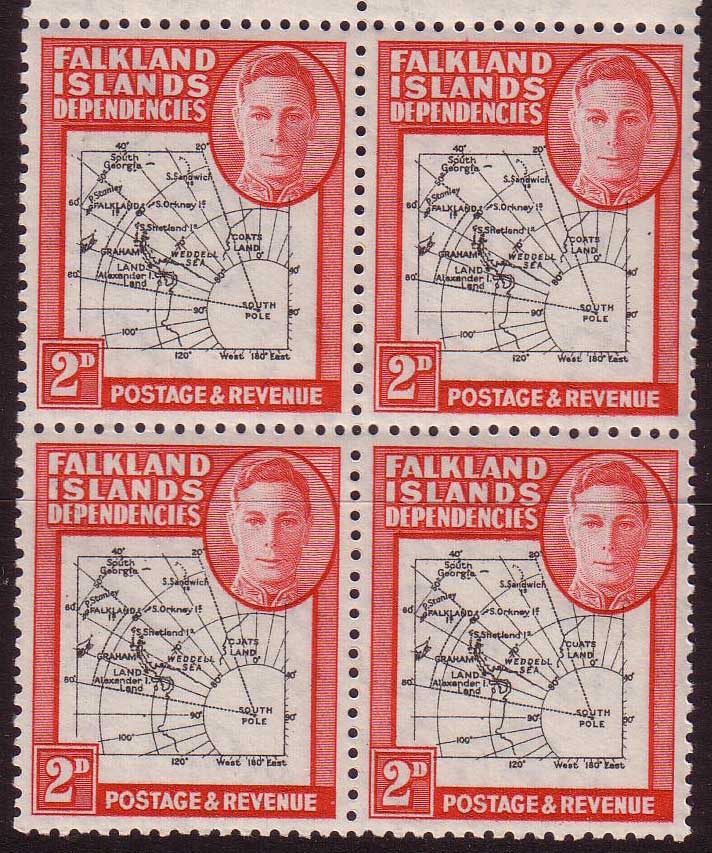
This post is going to deal with identifying some of the flaws in the Falkland Islands Dependencies ‘Map’ issues. There are two printings to deal with, commonly referred to as the thick and thin maps. Really the first thing to do is identify which set we are dealing with. The first set produced was the thick set, which ran from 12th July 1946 through to 1949. The later thin map set was introduced in 1948 and is the more valuable set in terms of money. So let us start with looking at thick and thin maps together. Here are two…
-
King George VI reigned from 11th December 1936 to 6th February 1952. The stamps issued in this time are a very popular period to collect. They are appreciated for the fine engraving work and attractive colouration. Scan a GVI stamp and view it on your monitor to see the work that was involved. It’s probably a bit of a cliche, but they do warrant the title of miniature works of art. A lot of the sets are pictorial which adds to the interest – some sets are reused designs first used in the stamps of George V. The king did…